For decades, floral foam was the invisible backbone of the wedding, event and funeral floristry industry — a green brick you could cut, soak and stab in seconds. It made floristry faster, made mechanics predictable, and made large-scale design possible in a single afternoon. It also, quietly, made floristry one of the most single-use, plastic-heavy craft industries in Britain.
The last ten years have changed all of that. From RHS Chelsea show gardens to the funeral parlour on the local high street, foam-free floristry has moved from a fringe preference to a genuine industry-wide trend. At the British Sustainable Floristry Academy we work with hundreds of florists each year who are moving away from foam — and the reasons are more nuanced, and more interesting, than “it’s just bad for the environment”. This is our field report on the sustainable floristry trends driving the foam-free movement in 2026.
A short history: how floral foam came to dominate
Floral foam was invented in the 1950s and adopted worldwide almost overnight. Its magic was speed: soak, cut, place. For a florist working to a tight event deadline, it removed hours of technical mechanics. What was less obvious in the 1950s — and much better understood now — is that the product is petroleum-based phenolic resin: a single-use plastic that never biodegrades. Every green crumb that has ever been rinsed off a florist’s bench has entered the water system, and is still there.
The environmental case: why the floristry industry is moving on
The reason foam-free floristry is now a genuine industry trend — rather than a niche preference — is that the environmental and consumer case has become impossible to ignore.
Microplastics in our waterways
Independent research has shown that traditional floral foam breaks down into microplastics almost immediately on soaking, and continues to shed particles for years in landfill. For an industry that markets beauty and nature, a product that pollutes rivers and oceans is a difficult contradiction. British florists have been increasingly vocal — and increasingly public — about wanting to work without it.
The client and consumer shift
Couples now routinely ask their wedding florist for “foam-free” or “sustainable wedding flowers” by name. Funeral directors are quietly requesting compostable tributes to align with woodland burial and eco-cremation options. Corporate clients want ESG-friendly floral installations. The pressure has moved from florists themselves upward — the client is now the driver.
The trends driving the change in 2026
Foam-free weddings have gone mainstream
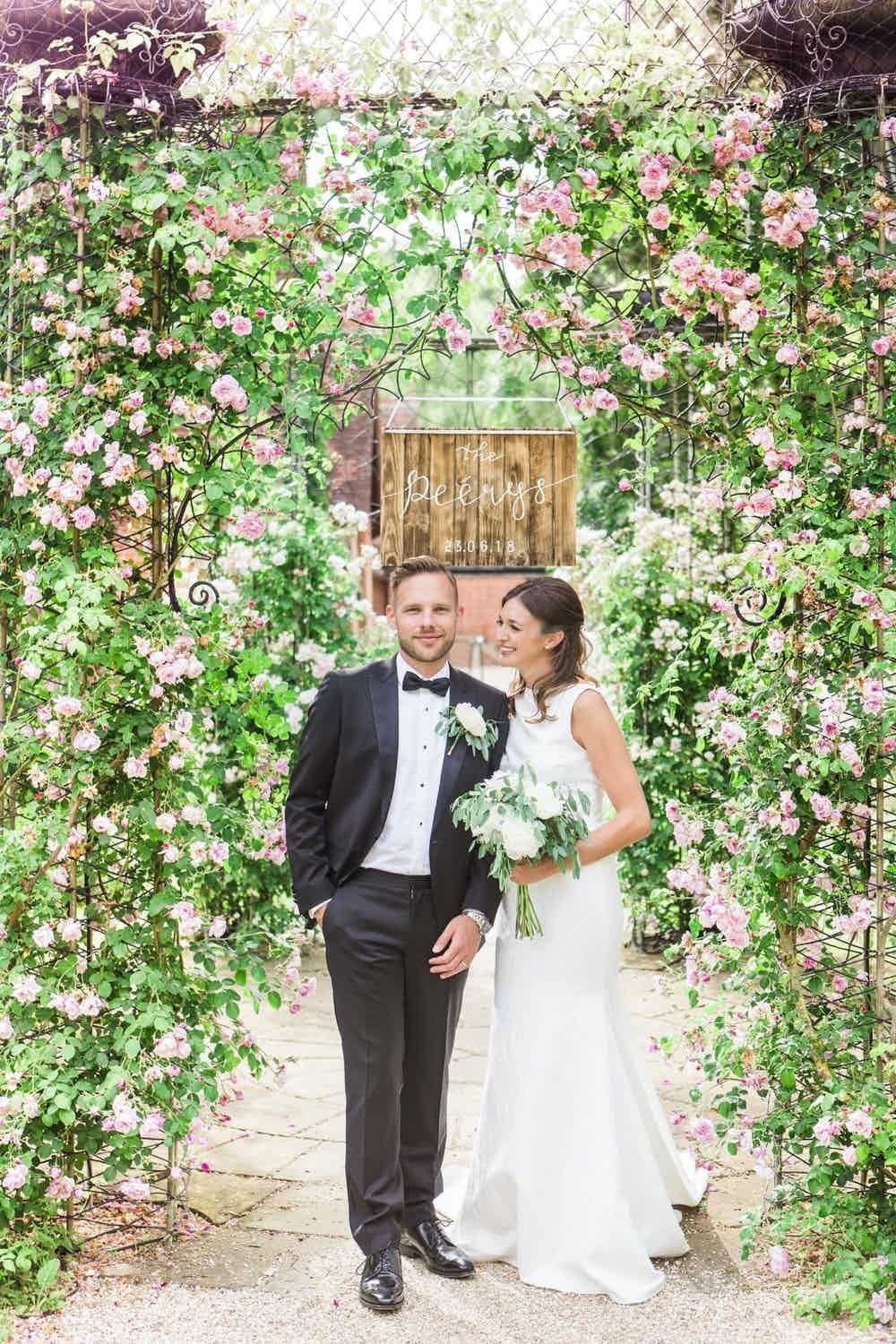
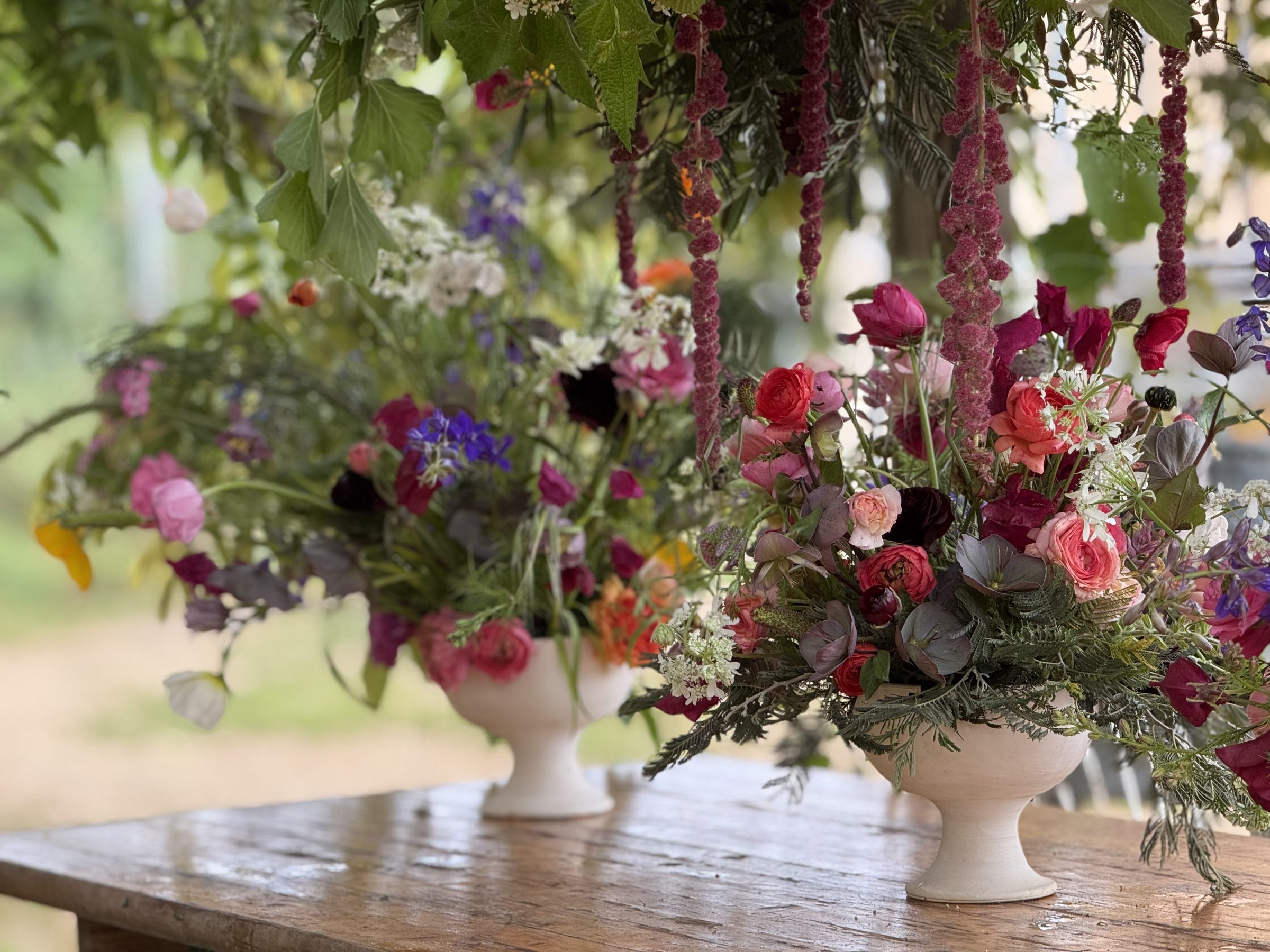
Ten years ago, foam-free wedding florists were a small vocal minority. Today the majority of high-end UK wedding florists market themselves as foam-free by default. Chicken-wire-and-moss mechanics have become the industry standard for arches, urns, arbours and hanging installations. Wedding magazines routinely feature sustainable wedding flowers as a category in their own right, and the RHS Chelsea Flower Show has been foam-free for its major installations since 2021 — a decision that quietly rippled through the entire British floral supply chain.
The rise of sustainable funeral flowers
The eco-funeral movement — woodland burials, biodegradable coffins, natural memorials — has spilled directly into floristry. Chicken-wire-and-moss funeral tributes, willow-armature wreaths, foam-free coffin sprays: the language and the mechanics are shifting. It is one of the fastest-growing niches in sustainable floristry, and every florist we teach who takes the leap tells us the same thing — clients are relieved when they are offered the option. If you would like to specialise, our Eco Funeral Flowers course covers everything from consultation etiquette to the full mechanics catalogue.
British-grown flowers reshaping supply chains
Foam-free and British-grown are two sides of the same conversation. When your stems have travelled twenty miles from a Buckinghamshire field rather than three thousand miles from a Kenyan or Colombian farm, the whole environmental logic of your work shifts. Flower farmer-florists — a hybrid role that barely existed a decade ago — are now one of the most influential groups in UK floristry, teaching foam-free mechanics because they cut and use the stems themselves. Our companion post on sourcing British flowers walks through the supply chain for anyone wanting to make the switch.
Compostable alternatives: the Phoam Labs revolution
For situations where traditional mechanics genuinely cannot cope — very large architectural installations, hanging structures, water-heavy funeral tributes — the industry is beginning to embrace corn-based, compostable foam alternatives. Phoam Labs’ polylactide (PLA) product degrades over 95% in eight weeks in industrial compost, and while it is not a replacement for chicken-wire-and-moss in most work, it is a genuine bridge for the last ten per cent of jobs. You can read our conversation with Phoam Labs founder Dundee Butcher for the full story.
Where to learn foam-free floristry
If you are a florist, flower farmer or committed hobbyist wanting to build your practice on foam-free foundations from day one, learning the mechanics well is the single most important thing you can do. Chicken wire, pin frogs, sphagnum moss, willow armatures and water tubes are a complete toolkit — but they take practice.
Our Fundamentals of Sustainable Floristry course teaches every mechanic step by step through video tutorials, downloadable PDFs and a private Facebook community — plus a live online open evening where you can meet Roz and Carol and ask anything before you commit. It is the fastest, warmest way to get confident in foam-free work, and it is the course we wish had existed when we were starting out.
A closing thought
The trends are unambiguous. Foam-free floristry is no longer the future — it is the present, and it is what the client is asking for. The florists thriving in 2026 are the ones who saw the shift early, learned the mechanics, and built their practice around them. Whether you come to us through the studio online, join us for a hands-on day at the Studio at the Farm, or simply download our free Foam-Free Mechanics Guide, there has never been a better moment to start.